
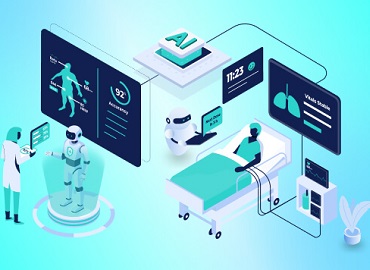
AI-Powered Medical Diagnosis Apps in 2026: Key Features, Costs, and Emerging Trends
- Super User
Sagar Bhatnagar
Healthcare is undergoing a major transformation as artificial intelligence becomes more deeply integrated into clinical workflows. The demand for faster and more accurate diagnosis continues to grow, especially as patient volumes increase and access to specialists remains uneven. Traditional diagnostic approaches often rely on manual processes, delayed reporting, and fragmented data, which can slow decision-making and affect patient outcomes.
AI-driven medical diagnosis applications are helping address these limitations. By processing large volumes of patient information, detecting patterns, and generating data-backed insights, these systems support clinicians in making quicker and more precise decisions. This shift is contributing to improved diagnostic accuracy, streamlined operations, and enhanced patient care experiences.
For healthcare providers, innovators, and technology stakeholders, it is important to understand how these solutions are designed and implemented before making strategic investments. This guide explores how AI-powered diagnosis apps function, their growing importance in modern healthcare, the essential features they include, estimated development costs, and key considerations for building them responsibly in 2026.
What Is an AI Medical Diagnosis App?
An AI medical diagnosis app is a software solution that leverages artificial intelligence and machine learning to support healthcare professionals in identifying medical conditions. These applications process a wide range of patient data, including symptoms, medical history, lab results, imaging scans, and inputs from wearable devices, to deliver meaningful diagnostic insights.
Building such an application goes beyond traditional software development. It involves creating intelligent systems, training algorithms on high-quality medical datasets, and deploying them in a way that maintains clinical accuracy, protects sensitive data, and complies with healthcare regulations.
It is important to understand that these apps are not designed to replace medical professionals. Instead, they function as advanced decision-support tools that help clinicians make more informed diagnoses, improve efficiency, and enhance overall patient care.
How AI Medical Diagnosis Apps Work
AI medical diagnosis apps follow a structured, data-driven approach that supports faster and more accurate clinical decision-making.
1. Data Collection
The process starts with gathering patient data from multiple sources, including symptoms, medical history, lab reports, imaging scans, and wearable devices. This comprehensive dataset provides a well-rounded view of the patient’s health and serves as the foundation for accurate analysis.
2. Data Analysis
Advanced AI and machine learning models analyze the collected data to identify patterns, detect anomalies, and highlight early signs of potential health conditions. These systems can process complex datasets at a speed and scale that traditional methods cannot match.
3. Diagnosis Generation
Based on the analysis, the application generates possible diagnoses, risk assessments, or clinical recommendations. These insights help healthcare professionals evaluate cases more efficiently and make informed decisions with greater confidence.
4. Continuous Learning
AI systems improve over time by learning from new data and real-world outcomes. This continuous learning process enhances accuracy, reliability, and overall performance, making the application more effective with ongoing use.
These applications are designed to support clinicians, not replace them. They function as intelligent decision-support tools that enable faster, data-driven decisions while preserving the expertise and judgment of medical professionals.
Why Invest in AI Medical Diagnosis App Development?
AI-powered diagnostics are becoming a central part of modern healthcare. For entrepreneurs, healthcare providers, and technology leaders, investing in this space offers both strong commercial potential and meaningful improvements in patient care.
1. Rising Demand for Digital Healthcare Solutions
Healthcare systems across the world are accelerating the adoption of AI-driven diagnostic tools to improve the speed and accuracy of clinical decisions. Real-time insights are especially valuable in environments such as emergency care, telemedicine, and remote healthcare, where timely decisions can significantly influence outcomes.
2. Improved Accuracy and Cost Efficiency
AI systems can process large volumes of data consistently, reducing the likelihood of human error. They are particularly effective in areas like medical imaging and pattern recognition, where precision is essential.
By improving diagnostic accuracy and reducing unnecessary testing, healthcare providers can lower operational costs while delivering better care.
3. Regulatory Compliance and Trust
Trust plays a critical role in healthcare. AI diagnosis apps are developed with strict compliance standards to ensure patient safety and data protection. Adhering to regulations such as HIPAA, GDPR, and FDA guidelines helps build credibility and supports wider adoption.
Solutions aligned with Software as a Medical Device frameworks are more likely to gain acceptance among healthcare institutions and patients.
4. Scalability and Market Expansion
AI-powered platforms are highly scalable. Once implemented, they can be deployed across hospitals, clinics, telehealth platforms, and even international healthcare systems.
This scalability enables organizations to expand into new markets, including remote and underserved regions, without heavy infrastructure investments.
5. Competitive Advantage
In a fast-evolving HealthTech landscape, AI-driven diagnostics offer a clear edge. Organizations can stand out through innovation, faster decision-making capabilities, and measurable clinical outcomes, which often lead to early adoption and strategic collaborations.
6. Increased Healthcare Access
AI diagnosis applications help address the shortage of specialists in many regions. By extending diagnostic capabilities to remote and underserved populations, these tools improve access to care while opening new growth opportunities.
7. Strong Investment Momentum
Healthcare AI continues to attract significant funding from venture capital firms and institutional investors. Diagnostic applications account for a substantial share of this investment, making the sector highly attractive for both startups and established enterprises.
How to Build an AI Medical Diagnosis App?
Building an AI medical diagnosis app requires a structured approach that combines advanced technology, clinical reliability, and regulatory awareness.
Below is a step-by-step framework to guide development: 1. Define the App’s Purpose and Target Audience
Begin by clearly identifying the problem your app will address, such as symptom assessment, diagnostic assistance, or chronic disease monitoring. Defining the target users, whether clinicians, patients, hospitals, or telehealth platforms, will influence features, workflows, and compliance needs.
2. Select an Appropriate Technology Stack
Choose technologies that support secure data handling, scalability, and real-time processing. This includes AI frameworks, backend infrastructure, and cloud platforms that enable efficient deployment and integration with healthcare systems.
3. Develop a Proof of Concept or MVP
Create a minimal version of the app with core diagnostic capabilities. This helps validate technical feasibility, assess model performance, and gather early user feedback before committing to full-scale development.
4. Train AI Models with Quality Medical Data
Use diverse and anonymized datasets to train machine learning models. The effectiveness of the app depends heavily on data quality, diversity, and proper model training techniques.
5. Integrate Compliance Early in Development
Incorporate regulatory standards such as HIPAA, GDPR, and relevant medical guidelines from the beginning. Addressing compliance early helps ensure data protection, reduces legal risks, and builds user trust.
6. Design a Clear and Accessible User Experience
Focus on creating an intuitive interface that works well for both healthcare professionals and patients. Features like simple navigation, multilingual support, and easy data entry contribute to better adoption.
7. Expand Features with Scalability in Mind
After validating the MVP, introduce advanced capabilities such as predictive analytics, telehealth integration, and intelligent decision support. Ensure the system architecture can handle increasing users and data volumes.
8. Perform Comprehensive Testing
Conduct testing across functionality, security, performance, and usability. This ensures the application meets healthcare standards and performs reliably in real-world conditions.
9. Launch and Continuously Improve
After deployment, monitor system performance, collect user feedback, and evaluate model accuracy. Ongoing updates, retraining, and optimization are essential to maintain effectiveness and compliance over time.
Challenges in AI Medical Diagnosis App Development
Developing an AI medical diagnosis app involves navigating a range of technical, regulatory, and ethical complexities. Addressing these challenges early is essential to ensure reliability, compliance, and long-term success.
1. Data Privacy and Security Concerns
Challenge: These applications handle highly sensitive patient information, making them vulnerable to data breaches, unauthorized access, and compliance risks.
Solution: Implement strong security measures such as end-to-end encryption for data in transit and at rest, use compliant cloud infrastructure, enable multi-factor authentication, and conduct regular security audits to safeguard patient data.
2. Limited Access to High-Quality Medical Data
Challenge: Training accurate AI models requires large, diverse datasets, which are often difficult to obtain due to privacy restrictions and limited availability.
Solution: Collaborate with healthcare institutions to access anonymized datasets, use synthetic data where appropriate, and apply data augmentation techniques to enhance model performance.
3. Regulatory Compliance and Approval
Challenge: Meeting healthcare regulations such as HIPAA, GDPR, and relevant medical guidelines can slow down development and increase costs if not addressed early.
Solution: Involve compliance expertise from the beginning, maintain detailed documentation, follow Software as a Medical Device framework, and adopt a privacy-focused development approach.
4. AI Model Bias and Diagnostic Accuracy
Challenge: AI systems may produce biased or inaccurate results if trained on unbalanced datasets, which can impact diagnostic reliability.
Solution: Use diverse and representative datasets, continuously monitor model performance, implement bias detection strategies, and adopt explainable AI methods to improve transparency and trust.
5. Integration with Existing Healthcare Systems
Challenge: Integrating with electronic health record systems and hospital infrastructure can be complex due to legacy systems and inconsistent data standards.
Solution: Use interoperability standards such as FHIR and HL7, develop secure APIs, and work closely with healthcare IT teams to ensure smooth integration.
Successfully addressing these challenges requires a balanced approach that combines technical expertise, regulatory understanding, and careful planning. Organizations that proactively manage these factors are better positioned to build scalable, reliable, and trusted AI-driven healthcare solutions.
The Future of AI in Medical Diagnosis
Artificial intelligence is set to redefine medical diagnosis by making healthcare faster, more precise, and increasingly proactive. As the technology advances, several key trends are shaping how AI-driven diagnostics will evolve in the coming years.
1. Higher Diagnostic Accuracy Through Advanced AI
With access to larger and more diverse datasets, AI models will continue to improve their ability to detect diseases at earlier stages and with greater precision. This progress will enhance diagnostic reliability across various medical specialties and help reduce errors, leading to better patient outcomes.
2. Wider Adoption in Telemedicine
AI-powered diagnostic tools are becoming an integral part of telemedicine. They enable faster and more reliable remote evaluations, helping extend quality healthcare services to rural and underserved areas where access to specialists may be limited.
3. Integration with Personalized and Genomic Medicine
The combination of AI with genomic data and lifestyle insights is paving the way for more personalized healthcare. Clinicians will be able to assess individual risk factors and tailor treatments based on each patient’s unique biological profile.
4. Real-Time Diagnosis Through Wearables and Mobile Apps
AI-enabled wearables and mobile applications are making continuous health monitoring more practical and effective. Real-time analysis of health data can help identify abnormalities early, allowing for timely intervention and reducing the likelihood of complications.
5. Predictive Analytics for Preventive Healthcare
AI-driven predictive models are shifting healthcare toward prevention rather than reaction. By identifying potential health risks before symptoms appear, providers can take early action and improve long-term health outcomes.
The future of AI in medical diagnosis is not only about technological advancement but also about building a more proactive, accessible, and patient-focused healthcare ecosystem.
Conclusion
AI medical diagnosis apps are reshaping healthcare by enabling faster, more accurate, and increasingly personalized clinical decision-making. Whether developing a new solution or enhancing an existing platform, investing in AI medical diagnosis apps development supports the shift toward more efficient and future-ready healthcare systems.
A successful approach starts with clearly defined objectives, the right technology foundation, and a strong focus on regulatory compliance. Careful planning, combined with continuous improvement and responsible implementation, allows innovative ideas to evolve into reliable, real-world healthcare solutions that deliver meaningful outcomes.
As AI continues to advance, its role in diagnostics will expand further, supporting clinicians, improving accessibility, and driving better patient experiences across the healthcare ecosystem.